




Electric Vehicles (EV), EV Charging Systems and EV Batteries
The adoption of electric vehicles (EVs) in Malaysia has emerged as a pivotal component in the nation’s pursuit of sustainable development and environmental preservation. In alignment with global efforts to reduce carbon emissions and dependence on fossil fuels, the Malaysian government has introduced a series of strategic policies and incentives aimed at accelerating the transition to cleaner transportation alternatives. Initiatives such as the New Industrial Master Plan 2030, the National Automotive Policy 2020 and the development of EV infrastructure underscore the country’s commitment to fostering a low-carbon mobility ecosystem. As the EV industry continues to evolve, a comprehensive understanding of its progress and challenges within the Malaysian context is essential.
Overview of the Malaysian Market
Key EV players
- Proton
In December 2024, Proton marked its official entry into the EV space with the launch of the e.MAS 7, its first fully electric model. Developed in partnership with Chinese EV giant Geely, this vehicle positions Proton to meet the government’s goal of accelerating EV penetration, particularly among middle-income consumers. Proton’s strategy aligns with policy incentives targeted at national automakers, including import duty exemptions for EV components and grants for research and development under the NAP framework. - BYD
BYD leads the EV market in Malaysia, capturing nearly 40% market share in 2024. Distributed by Sime Darby Beyond Auto, the brand has introduced several models, including the Atto 3, Seal, and Dolphin. BYD’s rapid expansion is supported by compliance with Malaysia’s EV-specific homologation and roadworthiness standards under Malaysia’s Road Transport Department, also known as ‘Jabatan Pengangkutan Jalan’ regulations. - Tesla
Tesla’s entrance into Malaysia in 2023 was facilitated by direct importation via the Tesla Malaysia entity, allowing it to sell vehicles without a local distributor. With models such as the Model 3 and Model Y, Tesla targets the premium EV segment. Regulatory exemptions under MITI’s Global Tier 1 Program have allowed Tesla to bypass certain requirements applicable to non-national automakers, reflecting Malaysia’s openness to global EV innovators. - BMW
BMW continues to cater to the luxury EV market through models such as the iX, iX1, and i7. Although the group experienced a year-on-year decline in registrations in 2024, it remains a key player. BMW’s investment in local assembly under the MITI-approved Completely Knocked Down (CKD) program allows for tax incentives, reinforcing its long-term commitment to Malaysia as a regional hub.
Development of EV Charging Stations in Malaysia
Malaysia’s National Energy Transition Roadmap (NETR) and Low Carbon Mobility Blueprint (LCMB) outline the country’s ambition to achieve 10,000 public charging stations nationwide, underpinning the transition towards a low-carbon transport ecosystem. These measures complement the broader policy direction encouraging consumers and industries to transition towards cleaner mobility solutions.
- Gentari (by PETRONAS)
Gentari Sdn Bhd, a wholly owned subsidiary of PETRONAS, has emerged as one of the most ambitious players in the Malaysian EV charging space. It has already deployed hundreds of chargers across commercial, residential and fleet use cases, with a goal to install 25,000 public charging points in Malaysia by 2030. It operates under the Gentari Green Mobility brand and has begun installing both AC and DC chargers across commercial, residential, and public locations.
Gentari is uniquely positioned to offer end-to-end solutions, from renewable energy generation (solar) to grid storage (battery systems) and EV charging infrastructure, making it a vertically integrated clean energy provider. - ChargEV (by Yinson GreenTech)
ChargEV, operated by Yinson GreenTech, is one of Malaysia’s earliest and largest EV charging network providers. It is best known for deploying charging points in public areas such as shopping malls, hotels, office buildings and universities. ChargEV offers a membership-based system with RFID access and integrated payment options. It enhances user experience through roaming partnerships with other networks like JomCharge. It often acts as a turnkey solution provider for property developers and local councils, offering installation, operations & maintenance (O&M) and data analytics. - JomCharge (by EV Connection Sdn Bhd)
JomCharge is operated by EV Connection Sdn Bhd and is recognised for its early entry and technical expertise. JomCharge offers both AC chargers (Type 2) and DC fast chargers (CCS2 and CHAdeMO), with DC chargers ranging from 30kW to 180kW. It primarily targets public high-traffic areas such as expressway rest stops (R&Rs), shopping malls, petrol stations and commercial properties. Some installations support fleet and logistics operators, creating B2B charging models.
JomCharge is the technology partner behind many Shell Recharge stations in Malaysia. This partnership enables deployment of DC fast-charging infrastructure at Shell petrol stations across highways and major towns. It also provides backend support and access for branded EV charging programs by luxury automakers such as BMW and Porsche, often through exclusive charging zones at showrooms or service centers. - ChargeHere EV Solution Sdn Bhd (by ChargeSini)
ChargeHere EV Solution Sdn Bhd operates under the brand name ChargeSini, which aims to support Malaysia’s transition towards sustainable transportation by developing and managing EV charging infrastructure across the nation. In 2024, ChargeSini partnered with Huawei Malaysia and Sunway Group to develop and manage EV charging stations across Sunway’s integrated townships and developments nationwide. Huawei serves as the technology advisor, providing advanced solutions and after-sales support.
ChargeSini also entered into a roaming collaboration with Singapore-based Charge+, allowing users from both networks to access each other’s charging stations. This partnership aims to facilitate cross-border EV travel and is part of a broader initiative to establish a 5,000 km EV charging highway across Southeast Asia.
Types of EV Batteries Produced in Malaysia
Lithium-Ion (Li-ion) Batteries
The most prevalent type produced by Malaysian manufacturers, lithium-ion batteries are widely used in passenger EVs due to their high energy density, relatively long cycle life and scalability. Malaysian-made lithium-ion cells typically fall into three chemistries:
- Lithium Iron Phosphate (LFP): Known for thermal stability, safety and lower costs, thus suitable for low to mid-range EVs.
- Nickel Manganese Cobalt (NMC): Offers high energy density and typically used in performance and premium EVs.
- Nickel Cobalt Aluminium (NCA): Used in high-performance applications, though less common in Malaysian production due to complex sourcing and higher cost.
Lithium-Titanate (LTO) Batteries
LTO batteries offer superior charge rates and longer lifespans, making them suitable for fleet EVs and electric buses. They are under limited production by firms participating in pilot public transport electrification projects, with a growing focus on second-life applications and grid storage.
Solid-State Batteries (Prototype & R&D Stage)
While not yet in mass production in Malaysia, selected research & development (“R&D”) initiatives are exploring solid-state battery development. These batteries promise increased safety and energy density but face commercialisation hurdles.
EV Battery Standards
In November 2025, Malaysia introduced the Malaysian Standard MS 2818: Battery Passport for Electrified Vehicles – General Requirements. This marks the first EV battery passport standard in the ASEAN region. The document covers battery passport data requirements, unique identifier labelling specifications and waste battery management.
Developed by the Department of Standards Malaysia (JSM) under MITI and in collaboration with various organisations including the Malaysia Automotive, Robotics and IoT Institute (MARii), MS 2818 aims to serve as a comprehensive digital record for EV battery’s lifecycle. The standard enhances traceability, transparency and sustainability by capturing key information throughout a battery’s entire lifecycle, from production and usage to end-life management.
MITI has stated that MS 2818 is expected to serve as a regional benchmark in promoting a more transparent and effectively regulated EV battery ecosystem.
Additionally, new safety regulations governing rechargeable (secondary) batteries are expected to be gazetted and enforced by mid-2026. According to the Ministry of Domestic Trade and Cost of Living (KPDN), the regulation is intended to strengthen Malaysia’s battery safety ecosystem and enhance consumer protection by mandating compliance with safety standards for secondary batteries.
Battery Manufacturers in Malaysia
- Samsung SDI Energy Malaysia Sdn Bhd (SDIEM)
In July 2022, SDIEM announced a cumulative investment of RM7 billion to establish its first EV battery cell manufacturing facility in Southeast Asia, located in Seremban, Negeri Sembilan. The plant focuses on producing cylindrical lithium-ion batteries, catering to applications in electric vehicles, power tools and micromobility devices.
SDIEM’s expansion aligns with Malaysia’s NAP and the 12th Malaysia Plan, aiming to position the country as a regional leader in EV manufacturing and green technology. The facility’s development contributes to Malaysia’s goal of achieving carbon neutrality by 2050. - EVE Energy Malaysia Sdn. Bhd.
EVE Energy Malaysia Sdn. Bhd. (“EVE”), a prominent Chinese battery manufacturer, has established its first overseas facility in Kulim, Kedah. The plant specialises in producing 21700-format cylindrical lithium-ion batteries, primarily for electric two-wheelers and power tools. The construction for the facility began in August 2023 and is scheduled to be completed within a three-year period. However, in an impressive achievement, the facility rolled out its first battery unit by February 2025, well ahead of typical timelines for such large-scale industrial projects. The facility spans about 220,000 square meters, underscoring the scale of EVE’s commitment to Malaysia.
With an estimated production capacity of up to 680 million cells annually, the factory is expected to produce over 10 GWh of batteries per year. This positions EVE as a key supplier, not only for local and regional markets but also for international customers in Europe and North America. - Hong Seng Consolidated & EoCell Inc.
Hong Seng Consolidated Berhad (HSCB), a Malaysian investment holding company, has partnered with EoCell Inc. (“EoCell”), an advanced battery technology firm from the United States, to establish a significant EV battery manufacturing presence in the country. This collaboration, formalised through a Memorandum of Understanding (MoU) signed in 2022, marks a strategic move to support Malaysia’s NAP, the Low Carbon Mobility Blueprint and the broader NETR. The manufacturing hub is planned to be located in Kedah Rubber City (KRC), a specialised industrial park in Padang Terap, Kedah, designated as a National Project by the Malaysian government.
EoCell brings to the partnership its advanced proprietary technologies focused on nano-silicon anode materials. Traditional lithium-ion batteries use graphite anodes, but silicon-based anodes offer the potential for up to ten times higher energy density, enabling EVs to achieve longer ranges, faster charging times, and better performance at lower costs. EoCell’s research also extends into solid-state battery technology, which replaces the conventional liquid electrolyte with solid materials, significantly improving battery safety, longevity and energy density.
Malaysia’s Initiatives in Support of Development of the EV and Battery Manufacturing Industries
Strategic Policy Frameworks
1. National Automotive Policy 2020 (“NAP”)
Central to Malaysia’s support for battery manufacturing is the NAP, which was the fourth version of Malaysia’s national automotive policy.
The NAP envisions Malaysia’s automotive industry in the era of digital industrial transformation from 2020 to 2030, enabling Malaysia to realise Connected Mobility, i.e. an enhancement of Malaysia’s automotive industry in the era of digital industrial transformation.
The NAP envisions various directional thrusts and strategies which introduce new technological elements in the development of the local automotive industry in line with the global automotive industry trend.
One of the new elements introduced by the NAP is the Next Generation Vehicle, i.e. a vehicle meeting the definition of an energy efficient vehicle and enhanced with intelligent mobility applications with a minimum of Level 3 Vehicle Automation (known as Conditional Automation). The EVs are identified as a type of Next Generation Vehicle.
The NAP states that standards development will become highly important to ensure the industry abides by the safety requirements and protocols for high precision systems and processes.
Specifically in relation to EVs, the NAP provides the following specific measures to be undertaken by the Government:
- to promote manufacturing and application of local battery and battery pack together with development of Battery Management System (BMS) and Thermal Management System (TMS);
- to develop standards to encourage battery swapping and wireless charging;
- to develop standards for recycling and disposal of batteries;
- to conduct feasibility studies on Hydrogen Fuel Cell technology;
- to develop an EV Smart Grid Interoperability Centre. The EV Smart Grid Interoperability Centre will include the EV charging protocol, the energy management system for the EV ecosystem and the safety usage of the critical components; and
- to apply well-to-wheel concept in the calculation of emissions from EVs.
It should be noted that the NAP is currently undergoing a mid-term review and the outcome of the ongoing review was expected by the end of 2025. This was led by the MITI-established Council of Automotive Eminent Persons (CAEP), to ensure that its strategies remain relevant amid rapid global shifts in mobility and electrification. While there is yet to be any confirmation regarding the outcome of the review, the Government has stated that the future policies under the revised NAP is likely to shift its focus from propulsion technology to energy efficiency standards, ensuring that vehicles, whether fully electric, hybrid or range-extended, achieve lower fuel consumption and emissions.
The mid-term review also seeks to address structural challenges in Malaysia’s automotive ecosystem, particularly the transition from internal combustion engine (ICE) vehicles to EVs, and increasing market competition from lower-priced imports from China.
Furthermore, the review forms part of a broader push to elevate Malaysia’s position as a regional vehicle manufacturing hub with a focus on electrification, localisation and global export growth. The updated framework continues to prioritise the development of energy-efficient vehicles (EEVs), electric mobility, autonomous driving capabilities and Industry 4.0 adoption, as well as empowerment of local vendors across the EV supply chain.
2. New Industrial Master Plan 2030 (“NIMP”)
The NIMP was issued in 2023 and sets forth Malaysia’s future direction in industrial transformation. It provides a national integrated plan for resilient industrial development until 2030 – setting the fundamentals for future policy development and enabling the industry at all levels. It articulates Malaysia’s position and participation in the global industrial environment.
The NIMP serves to:
- provide national strategic direction to lead the industrial development policies;
- be a conversation piece for investors and other economies on Malaysia’s position and direction; and
- feature the role of the Malaysian Government in shaping the economy.
The NIMP includes individual sectoral plans for 21 sectors, one of which is the automotive industry. The NIMP offers a comprehensive understanding of the industry’s direction during the NIMP period based on its historical performance, opportunities and strategies to overcome existing challenges and achieve its targets.
In line with the NAP, the NIMP identifies the Next Generation Vehicle as one of the trends and opportunities for Malaysia’s automotive industry. Zero-Emission Vehicles (ZEV), including Battery Electric Vehicles (BEV) is identified as a catalyst for new mobility for the next generation. BEVs provide an opportunity for Malaysia to pivot from ICE cars and build an industry of regional and global presence.
The NIMP states that Malaysia should build its presence in the full spectrum of the value chain to support the development of BEVs:
- Malaysia seeks to become the assembly hub for ASEAN and Asian markets for BEVs, leveraging its manufacturing capabilities and regional positioning.
- Malaysia aims to develop the export market for BEVs assembled within the country, taking advantage of its position as a major transhipment hub.
- Malaysia targets to be the manufacturing and design centre for right-hand drive BEVs and a leading country in manufacturing BEV 2-wheelers, with Government-established battery swap standards.
- Malaysia strives to be the market leader among ASEAN countries and a test bed for new mobility ideas, including autonomous vehicles.
Malaysia is said to be well-positioned to become a prominent manufacturer of components and parts for BEVs. In particular, the development of fast charging technologies and new battery materials that could help improve the performance and affordability of BEVs are areas to be explored.
The focus on EVs align with the action plans for the automotive industry set out by the NIMP, and further aligns with the NIMP missions, in particular the push for net zero by accelerating transition towards sustainable practices and catalysing new green growth areas.
Investment Incentives and Facilitation
Through agencies such as Malaysian Investment Development Authority (MIDA), the government offers a range of incentives specifically tailored for battery manufacturers. These include:
- Pioneer Status or Investment Tax Allowance (ITA) for companies investing in high-technology industries like battery manufacturing;
- Grants and soft loans for R&D activities, under programs like the Industrial Linkage Program and the High Impact Fund;
- Customised incentives negotiated under the Electrical and Electronics (E&E) Ecosystem framework for key investors such as SDIEM and EVE; and
- Facilitation for speedy licensing and approvals, coordinated through dedicated investor facilitation centers.
The NIMP also lists the key incentives offered for players in the automotive industry. They include the following:
Incentives | Agency |
Pioneer Status (PS) | MIDA
|
Investment Tax Allowance (ITA) | |
Import Duty Exemption | |
Individual Income Tax Relief | Inland Revenue Board of Malaysia (LHDN) |
Reinvestment Allowance | |
Special Tax Incentive | National Economic Recovery Plan (PENJANA) |
New Customised Incentive Mechanism (NCM)
| Automotive Business Development Committee (ABDC) consists of Ministry of Finance, MITI, Royal Malaysian Customs Department, Malaysia Automotive Robotics & loT Institute (MARii) and MIDA
|
Malaysia has implemented incentives to stimulate EV adoption. This includes full import and excise duty exemptions for completely built-up (CBU) EVs and road tax exemptions that were applicable until 31 December 2025. Following the expiry of the CBU duty exemptions, CBU EVs are expected to be subject to approximately 30% import duty and an estimated 10% to 30% excise duty, in addition to the prevailing 10% sales tax. However, the finalisation of the revised excise duty framework for battery electric vehicles remains pending.
For CKDs, the Government has extended excise duty and sales tax exemption up until 31 December 2027, reinforcing Malaysia’s intention to position itself as an EV manufacturing and assembly hub.
Separately, the Ministry of Finance has deferred the implementation of the revised Open Market Value (OMV) methodology by 6 months, shifting commencement from January 2026 to July 2026 to facilitate a smoother transition for vehicle importers and distributors.
New Customised Incentive Mechanism (“NCM”)
Malaysia is moving toward a more transparent and structured incentive framework through the introduction of the NCM. This represents a strategic shift from broad tax exemptions towards criteria-based, investment-linked incentives, replacing the earlier Cost-Benefit Analysis (CBA) model under the NAP.
The NCM adopts a menu-based scoring framework, providing original equipment manufacturers (OEMs) to determine in advance the points they can earn by committing to specific investment projects, and achieving a certain score will reduce the excise duty on a particular model. This framework also aligns with the Government’s intention to focus on R&D and deeper localisation of critical EV components as the automotive landscape evolves following the entry of Chinese brands that have gained substantial market share but have yet to establish significant local vendor ecosystems.
With the end of the tax-free period on EV imports in December 2025, OEMs are encouraged to undertake local assembly of CKD units, which enjoys full excise duty exemption under end of 2027. From 2028 onwards, locally assembled EVs will be subject to excise duty, although the applicable rates have not yet been determined. For comparison, excise duty for ICE vehicles currently ranges between 60% and 105% of the Cost, Insurance and Freight (CIF) value of the car, depending on engine capacity.
The shift to the NCM is intended to ensure that incentives correspond to long-term value of investments, reduce Malaysia’s import dependence, nurturing local capabilities and developing future technologies. It should be noted that the NCM is based on industry reports and public consultations but is not yet formally published in any statute, guideline, or official MITI policy document at this time.
Industrial and Infrastructure Development
Malaysia has strategically invested in developing industrial parks, logistics networks and supporting facilities to catalyse the growth of the EV battery manufacturing ecosystem. For instance, the Kulim Hi-Tech Park (“KHTP“) in Kedah which was established in 1990 as Malaysia’s first fully integrated high-technology industrial park. It has been repurposed in part to host battery cell and energy storage manufacturing facilities. KHTP offers high-capacity power supply, advanced water treatment facilities and strict environmental monitoring which are crucial for energy-intensive and chemically sensitive battery manufacturing processes. Currently, EVE is constructing a large-scale cylindrical lithium-ion battery manufacturing plant in KHTP.
Guidelines on Electric Vehicle Charging System (EVCS)
The Energy Commission (“EC”) has published the Guidelines on Electric Vehicle Charging System (EVCS) (“Guidelines”) on 24 February 2025.
The Guidelines are issued with the following objectives:
- to specify the safety requirements for the EVCS in accordance with the requirements under the Electricity Supply Act 1990;
- to outline the relevant standards and method of EVCS application;
- to set out the roles, functions and responsibilities of the relevant parties in relation to EVCS’ design, installation, operation and maintenance;
- to specify the requirement for a Certificate of Approval or release letter for the purpose of Electric Vehicle Supply Equipment[1] (“EVSE”); and
- to provide for any other matters which may be or incidental to the requirement of the EVCS.
[1] means an electric vehicle supply equipment or a combination of equipment, providing dedicated functions to supply electric energy from a fixed electrical installation or supply network to an EV for the purpose of charging.
Minimum Standards
Any party who intends to design, install, operate and maintain the EVCS installation shall adhere to the minimum specified standards as outlined in Appendix 1 of the Guidelines. Appendix 1 of the Guidelines provides a list of 30 international standards and their equivalent national standards (if there is one).
Regulated electrical equipment are to be tested to the specified standards. Equipment that are tested and certified to same standards of later revisions are also acceptable.
Types of EV Charging Mode
The Guidelines refer to the modes of electric vehicle conductive charging as provided by IEC 61851-1, i.e. Mode 1, Mode 2, Mode 3 and Mode 4. Mode 1 shall not be allowed to be used by any person who intends to design, install, operate and maintain the EVCS installation.
Any person who intends to design, install, operate and maintain the EVCS installation shall only be allowed to use Mode 2, Mode 3 and Mode 4 which are described below.
- Mode 2
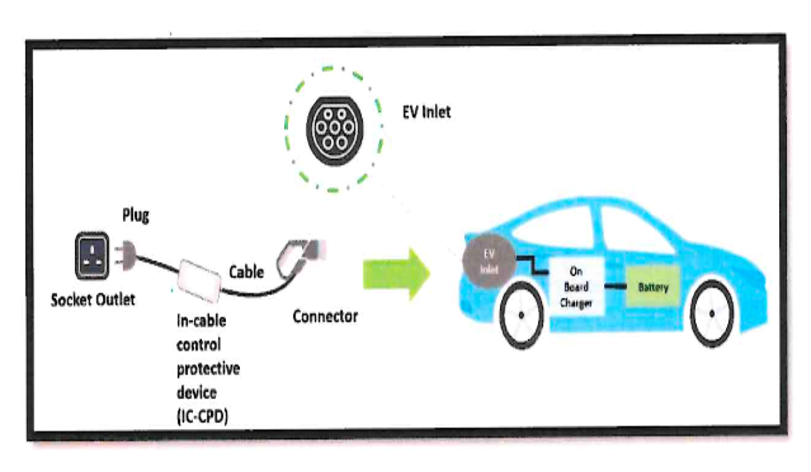
The Mode 2 charging connection for an EV involves the connection of the EV to an AC supply network (mains) with a current rating not exceeding 32A and a voltage not exceeding 230V AC for single-phase or 400V AC for three-phase at the supply side.
This connection utilises a standardised plug-and-cable assembly that includes an integrated In-Cable Control and Protection Device (IC-CPD). The In-Cable Control and Protection Device (IC-CPD) is installed between the plug and the EV as a complete set provides control pilot and safety function.
Mode 2 charging system is illustrated in the following figure in the Guidelines:
2. Mode 3
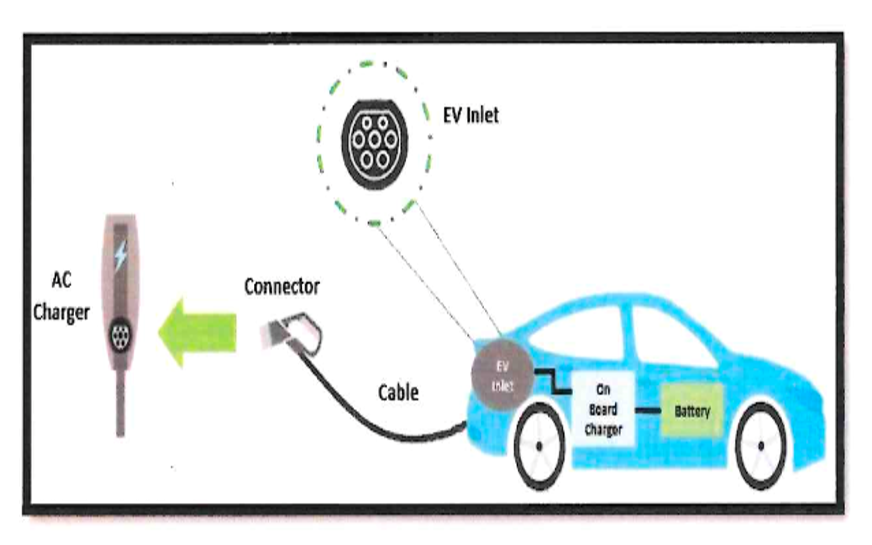
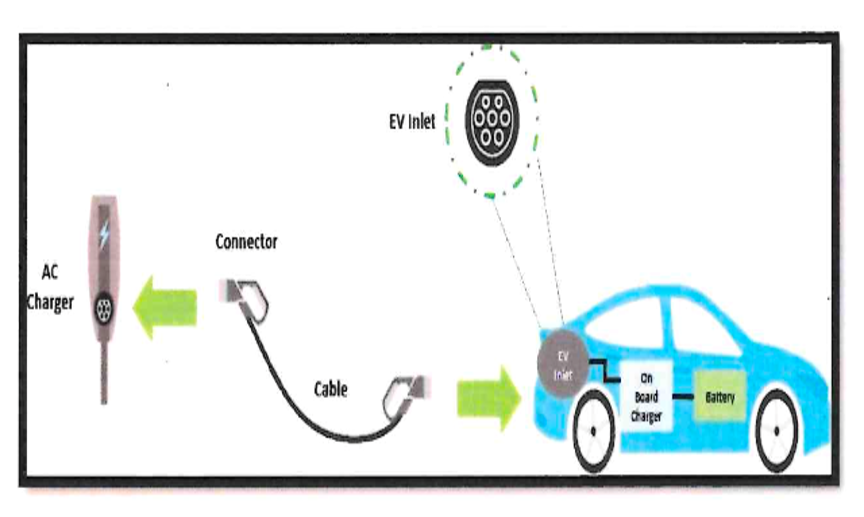
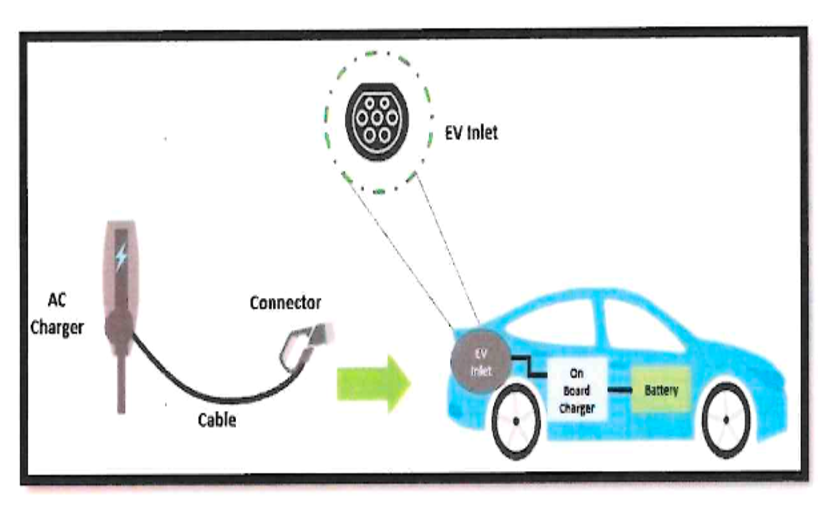
Mode 3 charging is a method for the connection of an EV to an AC EV supply equipment permanently connected to an AC supply network. The charger is equipped with a control pilot function that extends from the AC EV supply equipment to the EV.
The control pilot allows communication between the EVCS and the on-board charger of an EV to perform functions including verification of connection with the EV, continuous checking of protective earth conductor integrity, energisation and de-energisation of the supply and selection of charging rate.
Subject to the power rating of the on-board charger of an EV, Mode 3 charging can deliver a higher charging current (e.g. 230V/32A, 400V/32A, 400V/63A) and hence a shorter charging time.
Selection of EVCS depends on the charging protocol of the EV and on advice of the EV manufacturer.
The following figure illustrates a Mode 3 (Case A) connection of an EV to the supply network by using a cable and connector which is permanently attached to the EV:
The figure below illustrates a Mode 3 (Case B) connection of an EV to the supply network by using a cable assembly detachable at both ends to the EV:
The following figure illustrates a Mode 3 (Case C) connection of an EV to the supply network by using a cable and connector permanently attached to the EV charging station:
3. Mode 4
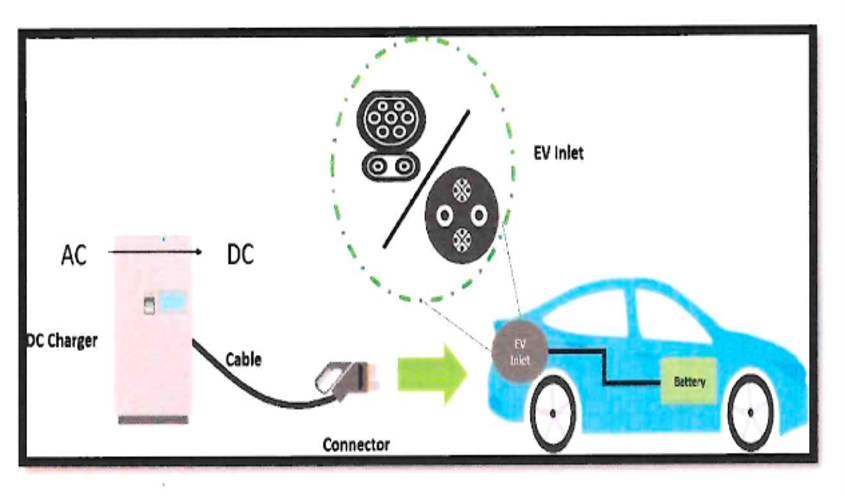
Mode 4 charging is a method for the connection of an EV to an AC or DC supply network utilizing a DC EV supply equipment, with a control pilot function that extends from the DC EV supply equipment to the EV.
The figure below illustrates a Mode 4 connection of an EV to the supply network by using an off-board charger to deliver a DC current directly to the EV battery and by passing the on-board charger:
EV Supply Equipment
1. Permissible Charger Connector
The permissible charger connector types for different mode of charging connection are as follows:
- For Mode 2 and 3, the permissible connector is Type 2 operating in alternating current (AC).
- For Mode 4, the permissible connector is Combo CCS Type 2 and CHAdeMO operating in direct current (DC).
2. Socket Outlet and Plug
The selection of socket outlet shall adhere to the specification outlined in IEC 62196.
For Mode 2 charging connection, the installation of the socket outlet and associated plugs shall adhere to the specifications outlined in MS 589-1, BS 1363-1, MS 1577 or IEC 60309.
For Mode 3 and 4 charging connection, the installation of the charging cable, connector and its relevant equipment shall adhere to specifications outline in Appendix 1 of the Guidelines.
The socket outlet can be installed with a minimum 1.2 meter height above finished floor. The specific positioning may be adjusted as necessary to accommodate the preferences of EV users and the prevailing site conditions.
3. Ingress Protection
The enclosures of the EV supply equipment shall possess a minimum IP rating in accordance with IEC 60529, as follows:
- indoor use at least IP41; and
- outdoor use at least IP44.
Requirement for Manufacturer, Importer, Seller and Advertiser
Any person who intends to manufacture, import, display, sell or advertise the EVSE must ensure that their obligations under Regulation 97 of the Electricity Regulations 1994 are fulfilled by obtaining:
- the Certificate of Approval for Mode 2 and Mode 3; or
- a release letter for Mode 4.
Installation of EVCS by Competent Person
All electrical wiring work needs to be carried out by the respective competent person in accordance with the Electricity Regulations 1994.
The respective competent person and any person under his control are responsible to comply with any standard or specification provided under the Guidelines in relation to any design used in, construction or operation of EVCS.
Protection for EVSE
1. Final Circuit
The EVSE or the socket outlet for EV charging shall be powered by a dedicated final circuit. The electric cable for the dedicated final circuit shall be protected by means of metal sheath or armoured, or installed in steel / PVC conduits.
Surface type electrical wiring must be protected through trunking or cable tray use PVC/PVC or XLPE/PVC cable type. The conductor size of the cable for each dedicated final circuit shall be selected based on the design of the EVSE requirement with references to IEC 60364-5-52. Cables used in dedicated final circuits shall be of continuous length without any joint.
2. Protective Device
The final circuit shall be protected from earth leakage and over current. Each final circuit needs to be individually protected by a protective device:
- Overcurrent Protective Device (OCPD) such as Miniature Circuit Breaker (MCB) or Moulded Case Circuit Breaker (MCCB) or Fuse of suitable rating; and
- Residual Current Device (RCD) with the following rating:
- for circuit of less than 100A, residual operating current not exceeding 30mA shall be installed using Type A or B of residual current circuit breaker (RCCB) or residual current circuit breaker integral over-current protection (RCBO); and
- for circuit of 100A or more, using Earth Leakage Relay (ELR) or Earth Fault Relay (EFR), and Over Current Relay (OCR).
For Mode 2, a current breaking device (i.e. socket outlet or similar device) need to be provided at the charging point for switching on after plugging and switching off before unplugging the charging cable assembly.
For Mode 3 and 4, EVSE communication medium device to display the activity of switching on and switching off.
The circuit needs to be protected from reverse power flow from EV batteries in the event of power outage to the installation. EVCS need to be equipped with reverse power flow protection and anti-islanding features in the charger system unless the EV charger is designed to only allow unidirectional power flow for battery charging.
Maintenance of EVCS
Regular inspection of the EVCS needs to be carried out based on the manufacturer’s recommendation. All parts of the electrical installation and associated equipment of the EVCS are to be maintained in a safe working condition and fit for its protection purpose while delivering the services required in a secure and reliable manner.
All records of the design, construction, operation, inspection, testing and maintenance of the electrical installation of the EVCS are to be kept, periodically updated and be accessible to relevant and authorised persons.
A competent person who undertakes any electrical work is required to use the appropriate personal protective equipment, whenever the circumstances require.
Licensing Requirement of EVCS
Any person who carries out any activity stipulated under Section 9(1) of the Electricity Supply Act 1990, i.e. use, work or operate or permit to be used, worked or operated any installation, in relation to the EVCS shall obtain a licence in accordance with the requirements under the Electricity Supply Act 1990 and any subsidiary legislation made under it.
For more information, click here to read more Doing Business Guide.
Notice
The contents of this Guide are owned by CLO and subject to copyright protection under the laws of Malaysia and, through international treaties, in other countries. No part of this Guide may be reproduced, licensed, sold, published, transmitted, modified, adapted, publicly displayed, broadcast (including storage in any medium by electronic means whether or not transiently for any purpose) without the prior written permission of CLO.
Please note also that whilst the information in this Guide is correct to the best of our knowledge and belief at the time of writing, it is only intended to provide a general guide to the subject matter and should not be treated as a substitute for specific professional advice for any particular course of action as such information may not suit your specific business or operational requirements. It is to your advantage to seek legal advice for your specific situation.
Disclaimer
Rajah & Tann Asia is a network of member firms with local legal practices in Cambodia, Indonesia, Lao PDR, Malaysia, Myanmar, the Philippines, Singapore, Thailand and Vietnam. Our Asian network also includes our regional office in China as well as regional desks focused on Brunei, Japan and South Asia. Member firms are independently constituted and regulated in accordance with relevant local requirements.